
Common Steel Casting Defects, Causes, and Solutions: An Expert View from Ahkemak Metallurgy
Steel casting forms the backbone of modern industry, especially in critical sectors such as defense, automotive, shipbuilding, and machinery manufacturing. The ability to produce high strength, durability, and complex geometries in a single piece makes the steel casting method indispensable. However, due to the nature of metallurgy, achieving “zero defects” in such a sensitive process requires significant engineering expertise and technological infrastructure.
As Ahkemak Metallurgy, with deep-rooted experience in the casting sector since 1973 and serving from our 4000 m² modern facility in Konya since 2008, we know that quality is hidden not only in the final product but in every step of the process. In this article, we will address the most common steel casting defects encountered in the industry, their root causes, and how they are overcome for quality production from an engineering perspective.
Why Do Defects Occur in Steel Casting?
Steel casting is the process of solidifying metal melted at temperatures exceeding 1600°C by pouring it into sand or ceramic-based molds. There are hundreds of variables at play in this process. The slightest deviation in factors such as mold sand properties, chemical composition of the metal, pouring temperature, pouring speed, and part design manifests itself as casting defects.
Many steel casting companies face these problems, but only those who invest in experience and technology can minimize these errors and offer sustainable, high-quality steel casting.
Most Common Steel Casting Defects and Solutions
Casting imperfections encountered in the industry are generally divided into surface defects visible to the naked eye and internal structure defects that can only be detected through testing. Here are the most critical ones:
1. Gas Holes (Porosity)
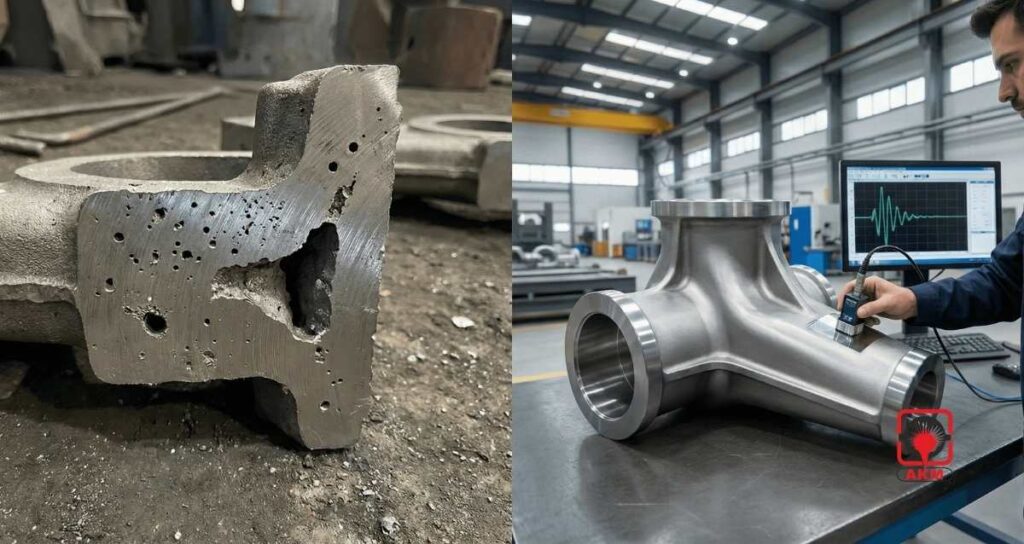
Porosity in casting refers to holes, usually spherical in shape, formed by gases trapped inside the solidified metal.
- Causes: The most common causes are excessive moisture in the mold sand, low gas permeability of the mold, or a high amount of dissolved gas (especially hydrogen and nitrogen) in the molten metal.
- Solutions: At Ahkemak Metallurgy, we strictly control mold moisture in our production processes, apply degassing procedures during melting, and prevent this problem by leaving sufficient gas vents in our mold designs.
2. Shrinkage Cavities
Steel shrinks volumetrically as it transitions from a liquid to a solid state. If the mold design cannot ensure continuous feeding of liquid metal to compensate for this shrinkage, shrinkage cavities occur in the regions of the part that solidify last (usually the thickest sections).
- Causes: Insufficient or incorrectly placed feeder (riser) systems, sudden changes in wall thickness in the part design.
- Solutions: The way to prevent this error is through strong engineering. By using pre-casting simulation programs, we map the solidification of the metal, identify hot spots, and place feeders at the most accurate points.
3. Hot Tears and Cracks
As the metal solidifies, it continues to cool and contract. If the mold or core resists this contraction movement of the metal, stresses occur on the material while it is still hot and has low strength, causing it to tear.
- Causes: Sharp corners in the part design, excessive hardness of the mold sand, or uneven cooling rates.
- Solutions: Adding radii to sharp corners during the design phase, adjusting the collapsibility of the mold, and implementing controlled cooling methods minimize the risk of cracking.
The Importance of Quality Control at Ahkemak Metallurgy
Knowing the defects is as important as detecting them. Ahkemak Metallurgy has a vision that stands behind every part it produces, not just manufacturing them. In our 4000 m² facility, a detailed quality control process is operated alongside high-tech production methods.
We guarantee the internal and surface quality of steel casting parts with chemical analysis via spectrometer, hardness measurements, and most importantly, non-destructive testing (NDT) methods such as ultrasonic testing (UT), magnetic particle testing (MT), and liquid penetrant testing (PT).
In conclusion, the steel casting process requires expertise. Understanding the root causes of defects and using the right technology is the key to durable and reliable products. Ahkemak Metallurgy, with its innovative approach and commitment to continuous improvement, continues to be your reliable solution partner in your most demanding projects.
You can find our contact address via the link.
For more content, please visit our News page.

